
Physiotherapy
Pelvic floor physiotherapy
The pelvic floor muscles play a part in many everyday activities. Physiotherapy can help when they are weakened or overloaded, and with urine leakage; we’ll tailor the approach to your condition.
Unfortunately, women often do not have the right information about treatment options and deal with the difficulties on their own, by limiting their activities. Physiotherapy is an important part of the prevention and treatment of all pelvic floor dysfunctions.
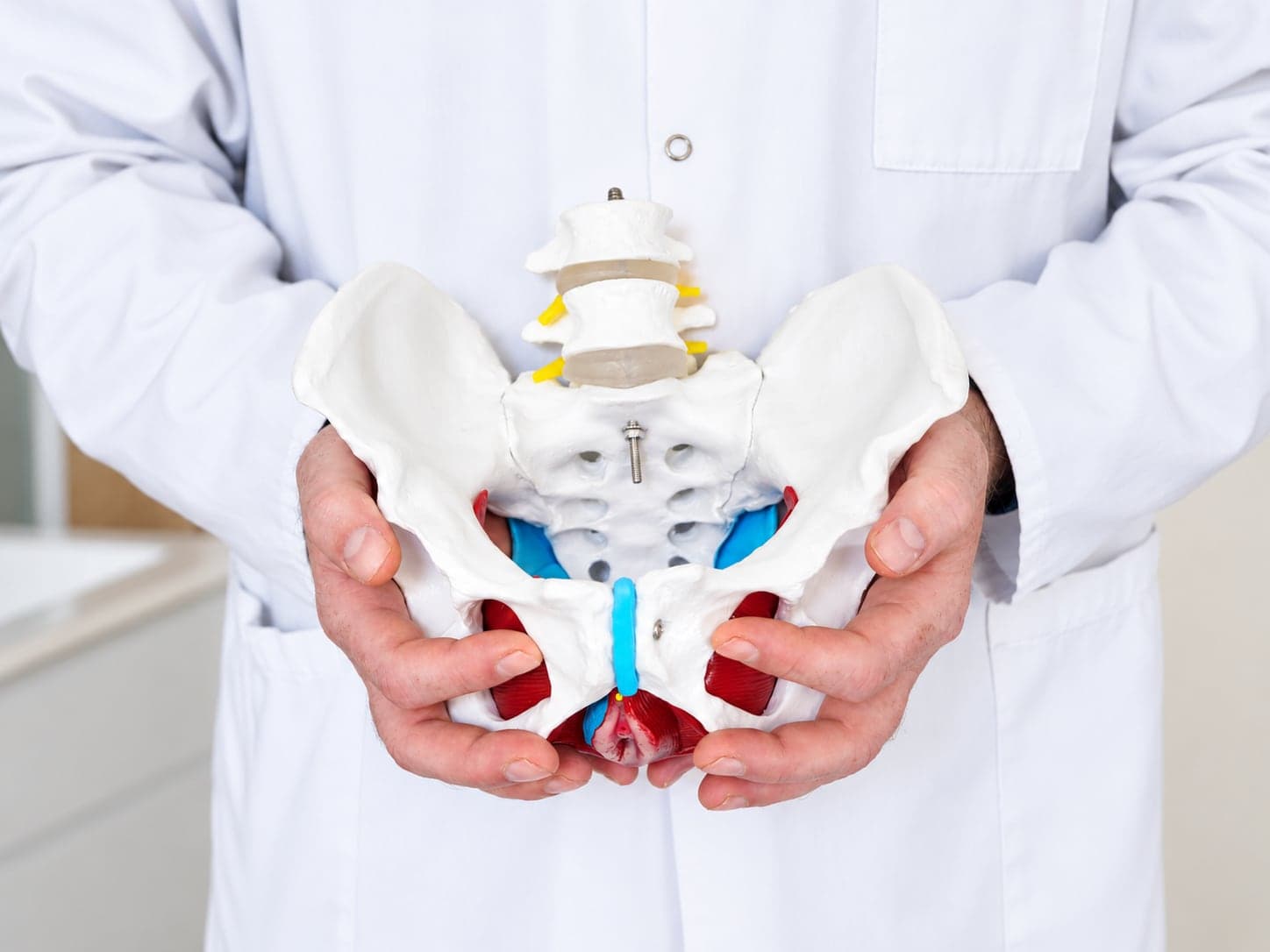
How pelvic floor disorders present
- Incontinence (leakage) of urine or stool
- Pain in the coccyx, sacrum or pelvis
- Painful menstruation
- Sexual dysfunction, functional sterility
- Descent of the pelvic organs
- A feeling of looseness and lack of firmness in the pelvic floor
Who is most at risk
- Women during pregnancy and after childbirth
- Women after gynecological operations
- Women in menopause
- People with chronic respiratory disease
- People who are overweight or have physically demanding work
How the therapy works
It is very common that a patient does not know how to activate the muscles, or whether she is doing it correctly. Along with the pelvic floor muscles she also engages, for example, the abdomen or the buttocks.
- 01Muscle assessmentFirst we examine the muscles specifically and determine their ability to activate, hold and relax.
- 02Training isolated activationBased on the assessment we focus the physiotherapy and learn to use the muscles correctly. Biofeedback trainers can help, and where the pelvic floor muscles fail completely, electrostimulation can be used.
- 03Integrating into the whole bodyOnce we can engage the muscles in isolation, we begin to engage them in the context of the whole musculoskeletal system and in ordinary daily activities. It is often useful to correct certain muscle imbalances and movement stereotypes.
Finally, it is good to know which activities could overload the connective tissue, and to learn to perform tasks with correct breathing and in the context of the whole body.
Book an appointment
We take phone enquiries on working days between 8:00 and 12:00. If you cannot reach us, we will call you back. You can leave a voice message, write to us through Medevio, or email info@ginnova.cz. Selected services can be booked directly in Medevio.